Showing posts with label Linden Lab. Show all posts

Thursday, November 19, 2015

Dutch Boy Running Out of Fingers at Linden Lab

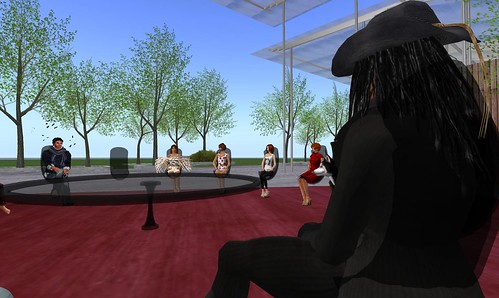
Location: Back at VWER Roundtable

How odd it feels to be blogging again, ever so briefly, about Second Life. I have returned to the virtual world for a couple of VWER meetings and am even considering updating Iggy's avatar shape and skin. His relatively new dreadlocks demand it!

Yet following a post I spotted in New World Notes, about Linden Lab's deciding to lower set-up fees for sims, I thought my two cents might contribute to the debate.

Second Life continues to lose sims at a stately pace. I wonder, as many SLers do, if the entire world is no more than a cash-cow for the Lab to milk until Project Sansar launches. Purportedly, it will:
"democratize virtual reality as a creative medium. It will empower people to easily create, share, and monetize their own multi-user, interactive virtual experiences, without requiring engineering resources. The platform will enable professional-level quality and performance with exceptional visual fidelity, 3D audio, and physics simulation."
These promises are at odds. If Sansar lets us "easily" create such 3D content using our Occulus Rift headsets, it would require tools far simpler than Blender or Maya.  Those high-end tools then put Sansar out of reach of many educators I know.  Motion-sickness issues for the Rift may be easier to resolve than those about the tools needed for content creation. I reserve judgement on the "native building options" the Lab mentions. Perhaps in-world creation for ordinary mortals and student teams will endure, freed from the cumbersome permissions system that hamstrings SL team-builds.

Meanwhile, the Lab's original virtual world chugs along shedding 20-30 sims per week of landmass, rather like an iceberg drifting with the Gulf Stream. The Lindens do no, and probably can not, do the one thing that would democratize Second Life again: cut monthly tiers deeply for ordinary users.
Image of trends for private estates, from Gridsurvey.com

At $25 per month for a homestead and $50 for a full sim, I'd rent server space to make a roleplaying game from my twisted imagination. I could then take advantage of SL's rich marketplace, finely designed mesh avatars and other content. Linden Lab launched its Experience Keys program precisely for content like what I envision. Unlike 3D creations at Turbosquid, the SL marketplace offers content for pennies or just a few dollars. I could build the rest.

I've no faith that the Lindens would do what it takes to get tiers lower, such as moving to a low-rent neighborhood far from San Francisco's posh restaurants and boutiques. I've no faith they'd focus more staff time on finding out what ordinary SLers, and not just their land-barons, need.

It will be interesting to see what happens as Sansar launches. I fear that some SLers are so immersed in the world that they do not see the dyke cracking and the Dutch Boy trying every finger and toe he has to plug the leaks. Then, one day, comes the deluge.

Tuesday, April 29, 2014

How Embrace Second Life's Inner Niche? Ask the Crawl-Space Dude

Location: Study-Break From Grading Finals, Butt in Chair

The numbers are trending back down for the number of private regions in Second Life. I cannot speculate about the temporary rebound we were seeing for a few weeks, but soon SL's region count will be lower than its ebb in February 2014.

Let's assume, for a moment, that the venture with OnLive's SL Go client, the coming of the Savior called Occulus Rift (praised be His Holy Name), other improvements by Linden Lab, and other efforts by the newly hired CEO do not stem the ebbing tide.  What then?

I agree with a remark made at New World Notes by CronoCloud Creeggan:
Nothing wrong with being a niche. We live in a finite world, the myth that growth is infinite and can continue forever and that triple digit yearly growth is required for 'success' has got to go. There's nothing wrong with finding a niche market and making steady money off of it, year in and out.
Other than the limited-population OpenSim Grids or walled gardens like InWorldz and Avination, who DOES what Second Life does? Activeworlds? PC Only. IMVU? Just a chat room with avatars. Cloud Party? Gone. High Fidelity? Still mostly a gleam in Philip Rosedale's eye. Unity 3D? Beyond the scope of most faculty and hobbyist developers.

Garry's Mod? Exactly how much technical knowledge does one need to run that thing?

Let me know what else does what SL does: a sandbox for user-generated content that purports to be a metaverse. I'm waiting.

That's the brilliance of finding a niche. If only Linden Lab would exploit that. Others do.

In renovating a house currently, I found myself completely unwilling to undertake needed work in the crawl space. I have done such work before personally, raking out ruts, putting in a vapor barrier, sealing around wires and pipes, installing subfloor insulation. Most HVAC and plumbing companies--mainstream all--would not touch my latest crawl space for a price I can afford.

Enter a local firm called CrawlSpace Ace, whose owner told me that they found a profitable niche, dirty work to be sure, and cornered the market. They do not want for business. Read this thread for contractors to see why, but read it during the daylight hours. You won't sleep well otherwise.


So what would Linden Lab have to do to think like a crawl-space contractor? The improvements  listed early in this post would help. Then they must retain the loyalists. Eventually, they have to lower tier. 

All that has been said. Yet if a crawl-space contractor can make a go of it, an IT firm in The Bay Area certainly can. We are still waiting.

Friday, March 7, 2014

SL Go Road Trip: A "Five-Star Flight to Somalia"

Location: OnLive with SL Go

I didn't even get photos with it, so my Firestorm shots will have to suffice.  Today I thought I'd do a comparison test with Linden Lab's OnLive-based client, SL Go and my regular Firestorm client.

Iris Ophelia had great luck walking around and taking photos with SL Go. Iggy, however, wants to drive a CAR and cross sims, not be a fashionista. That should work in a driving game, so in this newly gamified SL, why the heck not?

First I logged in with Firestorm and tried, twice, to get my car across some sims. Here's the first attempt:
Yes, readers, that was fun. And familiar.

I relogged and went back to the rezz spot by Linden Highway 7A to try try again. This time, things worked rather nicely! I had some rubber-banding when crossing sims, but no outright failures or crashes. I even got a few glam shots with draw-distance set to 256 meters on my viewer.


Not bad for third gear in the GTO, which would have been almost racing velocity back in the olden days. I figured "if it's THIS good with Firestorm, I need to try SL GO and burn through my free 20 minutes."

Fumbling along after installing OnLive, I found SL Go with some difficulty in the "My Games" section and logged in. More fumbling, all of my own doing, ensued as I navigated the client.

Then I tried to rezz the car and "jump in" as the pie menu commands.

I was standing in space, high above SL, unable to teleport. My friend Grizzla IMed to ask if I'd tried SL Go. My reply, about the client and Linden Lab, remains unprintable.

This new experience would lure me at 99 cents an hour for a bit of gaming-style driving across SL's increasingly empty mainland, when and if SL Go works on my favored rig. Right now, $3 an hour is too steep though it could be an important new revenue stream for Linden Lab. I will try again on my Macbook Pro (their highest end model) and later with iOS when they release that client. But color me dubious, if not gone.

In the end, on both log ins I saw scads of abandoned mainland and a few green dots. Linden Lab has needed something like SL Go for a long time. But the time for it may have passed. SL Go did deliver nice graphics during the three minutes before I crashed. 

But the core technologies of Second Life are antique. As a commenter at New World Notes so aptly put it, SL Go reminds him of taking a five-star flight to Somalia.


Thursday, February 27, 2014

Private Estates Climb in Second Life


Location: Thinking about a new SL Road Trip

I admit that I have had a morbid interest in watching the slow decline in the number of private estates in Second Life, using Grid Survey as my point of reference.

For the first time in a LONG time, the number of private estates has risen.  One week does not a trend make, but a net gain of 16 regions sticks right out.

Have a few folks who hold land in the virtual world, sensing a new direction by Linden Lab's newly annointed CEO, decided to expand their considerable investment? Or is this mere chance?

If we do see an upward trend in region numbers, then many prognosticators, myself included will have to revise a few ideas.

Saturday, January 25, 2014

Cloud Party, We Barely Knew You


Location: Prognosticator's Chair

I never spent much time in Cloud Party, though Cyn Skyberg did reach out for a phone interview about the potential of the virtual world for education.

I was my usual glum self about the future of user-generated virtual worlds: I told Cyn that if CP didn't run on mobile devices well, my students would roll their eyes and say "oh please. More busy work." If they could, however, explore the richness of a virtual world between texts and status updates (he says with a smirk) they might not savage me in class evaluations.

Despite my glumness, I still think the technology has a future, and Cloud Party impressed me. Now Yahoo has bought the company and will shut it down.

My glumness about virtual worlds also has a note of regret: I liked Cloud Party's browser-based world and freedom, as in Second Life, for normal humans without skills with Maya or Blender to make content.

What Yahoo does with the Cloud Party team remains to be seen. Yahoo is trying to survive in a hostile environment dominated by Facebook, Google, and Twitter as places where users spend lots of time finding or sharing content.  Perhaps Yahoo will launch games through its portal as Facebook has done well (including Cloud Party).

What an interesting week in the otherwise moribund world of user-generated virtual worlds. With Rod Humble leaving Linden Lab as CEO and Cloud Party running down the curtain, we'll see what comes next. Philip Rosedale has not, apparently, given up on the technology. His High Fidelity project looks like a reboot of SL's utopian promise.

So accuse me of wanting to believe. I don't need virtual worlds to socialize, but they rock for building simulations and DIY roleplaying. Here's to someone getting it right and making it a popular way to spend time!

Thursday, October 17, 2013

Some Numbers to Ponder

Though I did get an A+ in the one statistics class I was forced to take (and perversely, enjoyed immensely) I'm no number-cruncher.

So I "ran a few numbers" today, while watching the verbal pie-fight at NWN about the Linden Lab terms of service and how it might be influencing content creators.  It would seem to me that a better test of Linden Lab's success or failure would be how many new content-creators are coming into the platform. A few high-level departures now won't do much, in terms of establishing a trend.

There is a clear trend to ponder in SL. I pulled these figures from Grid Survey's rankings of private estates in-world:

Date/ Number of private estates / Change from previous entry

10-18-10 / 24791
10-31-11 / 24432 / -359 regions
10-14-12 / 21504 / -2928 regions
10-13-13 / 19582 / -1922 regions

I suppose there's comfort in the smaller decline from 2012 to 2013.  What does the overall trend portend? At some point, there will come a tipping point. What the Lindens do when their world is no longer profitable enough to satisfy their Board remains as mysterious as anything else that comes from their offices.

Thursday, September 26, 2013

Linden TOS = Theft?

Location: State of Shock

The new Linden Terms of Service raised many hackles at today's VWER meeting, which I agreed to host as Kali was away.

Note the clauses here:
"you agree to grant to Linden Lab, the non-exclusive, unrestricted, unconditional, unlimited, worldwide, irrevocable, perpetual, and cost-free right and license to use, copy, record, distribute, reproduce, disclose, sell, re-sell, sublicense (through multiple levels), modify, display, publicly perform, transmit, publish, broadcast, translate, make derivative works of, and otherwise exploit in any manner whatsoever, all or any portion of your User Content"
I'm glad I'm done teaching with Second Life. Never again. And the Lindens must have good lawyers. Vassar still has content there; the new TOS means that Lindens could use Vassar's logo or re-sell it, if one applies the TOS literally.

Yet another reason to set up one's own grid and distribute the work under  a Creative-Commons license.

Wednesday, August 28, 2013

VWER Educators Discuss the Linden Discount

Location: Back in Second Life, Briefly

On August 15, I guest moderated the VWER meeting and decided it was time to chat about the new tier discount in SL, to see what others think or are doing.

The complete transcript of our meeting can be found here. Meanwhile, it's safe to say that a few "wants" emerged from our meeting, even as Linden Lab reinstates its discount:
  • An educational continent: this was on the Linden radar in 2010, before the company suddenly fired its staff who supported education.  We'd get a lot of synergy from proximity, and we'd also be able to rent parcels smaller than an entire sim, in a setting with others like us.
  • Linden staff tasked to support education: As in "full-time and on-call." The software vendors I deal with, as I pay them far less annually than what we'd pay in discounted Linden tier, have these helpers by the phone during US business hours. Many at the VWER meeting felt that Linden Lab could afford concierge service for education, too.
  • An educational portal online: It's just an embarrassment to show educators and administrators the socially focused SL Web site, let alone the racy content of Marketplace. We need something that looks like education, not reality TV.
  • Fixing permissions for group builds: We need a new level of permissions so that student builders (who graduate) can not only transfer content to a team but cede "Creator" setting so the content can be exported, backed up, and linked for builds.  While we are at it, how about some off-world backups of the IP we create?
Great ideas, all. I am not holding my breath.

Though I personally think it's too late to bring education back to SL, or even reversing the continuing loss of land-mass in the once popular virtual world, if the Lindens are serious about it, these steps would help.  There are other choices out there beyond OpenSim; Educators now can export virtual-worlds content to worlds employing Unity 3D content.

Tuesday, August 6, 2013

What Rod Humble Saw

Location: Linden Lab Secret Facility

Now we know the CEO's experience with the Oculus Rift. I think the new-projects team went right out to Vesuvio and got plastered.

Wednesday, May 1, 2013

Leaving Las Vegas: 6 Years in Virtual Worlds, Farewell

VWER 25 April 2013
Location: Grading Finals

During the Spring Semester of 2007, this fool rushed into Second Life, something he felt would not only change education but the world beyond. Virtual worlds looked like a utopian technology with lots of zealous folks ready to evangelize the masses.

Six years later, grading what may be my last-ever student projects about virtual worlds and somewhat wiser, this educated fool wonders why SL did not change the world or even higher ed. I've written elsewhere about why SL failed to become that "3D Web" of yore.  Meanwhile, the bandwagon has moved on, the cheerleaders yelling "hurrah!"and "higher education will never be the same!" for MOOCs.

I'll sum up what I've learned about utopian narratives and would-be transformative technologies here, based on not only the last 6 but the last 25 years of studying and writing professionally about technological change, especially that which generates legions of enthusiasts.
  1. Look past the message to the messenger
  2. Wait for results unless you are an entrepreneur or venture capitalist
  3. Be a trailing-edger
  4. Find community locally, not just online
  5. Consider what students have in their hands
Lesson one: Look past the message to the messenger

I first head about Second Life in a story from Wired. That is not a sedate or juried publication; it's the Popular Mechanics of the digital era. Ever the sucker for flying cars and moon bases, I decided "I need to get in early with this technology," not considering that one company, with a closed platform not built for education, held the cards. I trusted the vision of Magic Koolaid provider, Philip Rosedale. Linden Lab's corporate culture and Rosedale's wandering vision both disappointed this educator, along with many colleagues.

Who is pushing MOOCs today? College faculty members? Technologists who embrace the new without considering pedagogy of large classes with little or no contact with faculty? Right-wing lawmakers eager to dilute the power of those "tenured radicals" supposedly in charge of Higher Ed? Boards of Visitors eager to promote a school "brand" without a clear sense of what it will do to curriculum, staffing, or the long-term value of that "brand"?

Ask yourself, and take a deep breath before jumping on the band wagon.

I do wish I'd looked past the euphoria about virtual worlds in 2007 to see who was cheering most loudly.

Lesson Two: Wait for results, unless you are an entrepreneur or venture capitalist

I was not in virtual worlds for the money. As noted just now, I wanted to be in on "the next Web," as many were then pitching SL. In 1993, when I first saw a moving weather-pattern on the Mosaic browser in Dickie and Cindy Selfe's lab at Michigan Tech, I knew I was seeing something historic. In 2007 I thought so again, without applying the very critical-thinking skills I teach my students.

From 2003-06 or so, it made sense for venture capitalists to take a bet on this new technology. It might have become the next Web. Educators, however, need to always place sound pedagogy ahead of tech, which is a suspicious I have about the euphoria over MOOCs at the moment. I saw that same brand of enthusiasm for MOOs in the late 80s and early 90s, literary hypertext a bit later, glove-and-goggle VR from the 80s to the present, and of course, virtual worlds.

While one might reasonably claim that virtual worlds are going to become significant culturally, I'd suspect lots of Magic-Koolaid drinking by an educator who claimed SL will ever again be more than a niche-product in years to come. AJ Kelton of VWER rightly called SL "The AOL of virtual worlds" to the disdain of several Linden Lab staff. AJ was correct, and the Lab staff in question now work elsewhere, after being fired during the first stages of Second Life's ongoing and palpable decline.

Bottom line for me: waiting to see if SL lived up to its hype would have cost me nothing in 2007, and would have saved me time. Had I first taken a class in-world in 2009, I'd have been ready for the myriad frustrations and technical issues that bedeviled a product that seemed very much in Beta up to that point.

Lesson Three: Be a trailing-edger

During the summer I spent with the Selfes and their grad students at Michigan Tech, Richard "Dickie" Selfe, co-founder of that school's CCLI humanities lab, along with wife and fellow scholar Cynthia Selfe, once told me only to adopt trailing-edge tech for teaching and learning. The Selfes were among a group of 1980s pioneers with personal computing in the classroom, and Dickie's lab at MTU was a playful space, with stuffed animals, a coffee machine, snacks, and weekend gaming sessions with Doom and similar titles.  I'm sure that at Ohio State they continue this practice, so influential to young scholars of writing pedagogy in writing-intensive curricula.

At every step, while the Selfes liberally experimented with leading-and-bleeding-edge applications, in the classroom they proceeded more carefully with undergraduates. The older technologies were stable, easier to support, and grounded in best practices for teaching.

My experiences in 2007-8 in SL, and then in 2011 with OpenSim's Jokaydia Grid, taught me the dangers of being on the bleeding edge. My students and I bled. Only Jokay's personal help saved the final exam in 2011, but it left a bitter taste in my mouth for teaching with OpenSim. As for SL, only by 2009 was it stable enough for a class to appreciate. That class was, ironically, my last one to focus on the technology, rather than using it for a single project.

Today, SL as a product is fairly stable, and critical and scholarly work about virtual worlds has emerged to guide our pedagogy. One would be far better off starting today as a SLer with students, given these two changes. Those on the bleeding edge, however, get cut by it.

Lesson Four: Find community locally, not just online

My years with the Virtual Worlds Education Roundtable have been good ones, and I cherish the faculty contacts I have made there. That said, the weekly meetings and constant advice did not compensate for a lack of interest in virtual worlds on my campus. With other innovations, from our Writing Consultants program to First-Year Seminars, we meet in person and I have lunch with folks in the flesh. There is no substitute.

Our technologists all had avatars before I did, but they never convinced more than a handful of faculty to try SL. The learning curve, the oddness of avatar-based education on a residential campus, and the lack of incentives for faculty all worked against us.

In the end, SL was an experiment that failed at Richmond. When Linden Lab renewed the 50% discount for education (if you ask the right person!) we declined. Why spend even $150 monthly for a product that might be used once every few years by one faculty member? Meanwhile, our technologists have other more tasks, from supporting Blackboard and other meat-and-drink software to  new initiatives with mobile apps.

Mobile may turn out to be the "new shiny object" for education, but it's not a niche application for students. As for MOOCs? I will wait to see comparative studies of students' learning outcomes in them and outside them. That should have been done for virtual worlds.

Lesson Five: Consider what students have in their hands

The transition to smart phones as students' primary communications tools has changed everything for us. While laptops abound, students use them like big phones: never plugging in the AC adapters, perching them in nooks where Millennnials gather to collaborate, plastering them with stickers to personalize them. I suspect that with a better keyboard, students would do their content creation on fast tablets, since we have ubiquitous and fast wireless everywhere on campus.

None of that I could have foreseen in 2007, since I did not even slow down enough to consider how poorly SL would run on many laptops, especially those not hard-wired to an Ethernet port or plugged into a AC outlet.

Even with desktop connections, students loathe SL's lag. I saw that last week in the finals. Perhaps server-side baking from Linden Lab will make SL run better on what my students still use for content creation--laptops--though not on phones, where virtual worlds simply cannot display with any sort of grandeur.

But by then, Iggy will have left the virtual building.

Coda:

I'm thankful for an experiment of six years, even if the experiment failed. At least virtual worlds generated two publications for me, as well as a forthcoming anthology I'm co-editing with some chapters about virtual worlds. I don't write the rules, but publications and teaching evaluations are the currency of academia, despite the best wishes of utopians that it be otherwise.

It is always possible that my teaching load will shift again, and my Chair and Department will call on me to teach my course about the history, culture, and future of Cyberspace. In such an event, Iggy and his students will be back. Look out.

Monday, April 15, 2013

SLers and Paying Attention to Updates


Location: SL Marketplace

As I prepare my swan-song teaching in SL (at least for the foreseeable future) I made some changes to the setting and dangers of the virtual House of Usher.

My last students to use it, in 2011, wanted some real chances of mayhem. I've obliged by adding a roleplayer's HUD to all of the premade avatars, and I set out to spend a few thousand Linden Dollars to add some traps, tricks, and mayhem.

The problem has been that items from Marketplace I ordered have not been delivered. Repeatedly. I think I know why.

Linden Lab recently updated its system for merchants, so they do not use a "Magic Box" server in-world, a remant of the time when the Lab purchased the retailers XstreetSL and Onrez. Now merchants who have read the notices use a direct delivery method. Note those words "who have read the notices" from Linden Lab.

Debates about Marketplace or the coming of direct delivery killing in-world real estate rage, but my concern is elsewhere. Never before have I had a Marketplace delivery to me fail.

Never.

Now both items I've purchased for the Usher avatars failed. I'm guessing that the creators have them in a Magic Box that is now useless.  How many other hundreds of small merchants, no longer active in SL, have had this occur because they were not paying any heed?

I'll send the Usher avatars shopping in-world to buy what they need, but the situation brings up a larger question. With the approach of server-side baking what will happen to tens of thousands of SL users who did not get the rather obscure blog post by the Lab, some time back? Firestorm's team has warned us to be ready. Linden Lab, however, has been all wine and roses and one blog post.

Yet even with Firestorm's good advice, I would hazard a guess that many of us don't read the text on our log-in screens.

If what I see at Marketplace, among folks who could be making money, is any indicator, hold onto your prim hats.

Chaos is coming to a metaverse near you. Wait for it.

Friday, April 5, 2013

How Customer Service Should Work: Help from eBay


Location: Boxing up stuff to ship

As a "power seller" at eBay (over 200 auctions in the last year) anything that slows down the process of listing an item means a cascading loss of time.

The company recently revised its photo uploader, so it became impossible to edit a listing while the photos uploaded. Normally that poses no problem, but 2 minutes lost during each of 10 listings means 20 minutes lost.

I asked eBay to change their uploader back to the old system, and very quickly--less than a month--I got this reply from the firm:

Dear sellers,
 

In response to your feedback to able to edit listing in the background, we just rolled out an enhancement to address that. So now you will able to work on your listing while waiting for photo upload.
 

I strongly encourage you to test out and let me know your thoughts.

Thank you for your support!


For the sake of conversation, let's compare that sort of feature request to, say, Linden Lab's turnaround time for a problem.  Moral? Listen to your customers.


Sunday, March 24, 2013

Jessica Lyon of Firestorm Discusses Changes to Viewer Software


Location: VWER Meeting

Just over 40 educators and guests at VWER listened to Jessica Lyon discuss upcoming changes that all third-party viewers must make to work with server-side baking and other innovations that Linden Lab will soon roll out.

How soon? No idea, but "soon," as Jessica herself does not know. I'd say "not a moment too soon," as we soon crashed the simulator where the meeting occurred. After a restart, ten of the group never returned.

Thus the current state of SL. If the coming changes mean less lag and more stability, so be it.

The complete transcript of Jessica's Q&A can be found here.

Friday, March 15, 2013

The Sweet Smell of Desperation

Location: Looking at barrel and refusing to be bent over it again

As Linden Lab gradually loses landmass in its virtual world, as shown so graphically in Tyche Shepherd's Grid Survey data, the Lab turns again to a dog it kicked repeatedly in 2010: educators. Hamlet Au broke the story that the Lab is "quietly" reaching out to selected schools and nonprofits who lost their 50% discount on the Lab's exorbitant tier rates: come back, and you will get the discount again. According the Hamlet, the discount works as "a full private island for $1,770 per year, or $3,540 for two years."

 "Please, oh please," Linden Lab might have added. Here's why educators should reply with a firm "no thanks."
  • Fairness to All Customers: Why should some educators get this discount, and not others? While vendors in education do offer volume discounts, it is unclear if the new educational offer applies to potentially large estates: a cap-and-gown version of the Lab's Atlas Program.

    I'd prefer across-the-board cuts for all customers, something the Lab apparently cannot do.
  • Focus on Entertainment, Not Business or Education: I've long felt we made a mistake in thinking that SL would be amendable to education. We educators thought of Linden Lab as just another software vendor.

    When the educational discounts had existed in an earlier era of Second Life, the preferential treatment made sense, as educators were then a sort of "halo" customer for a product the purportedly would be a "disruptive" technology intent on changing the world.

    Today, the Rosedale/Burning Man dream is long gone. SL, under CEO Mark Kingdon, tried to enter the enterprise market and failed, even as the Lab's educational team was fired and the discount for educational and non-profit customers ended. I'd hoped that Rod Humble, with his impressive Electronics-Arts pedigree, would at least restore some sense to an unsustainable revenue model based upon extracting tier payments from a declining user base.

    Instead, since his coming the Lab has clearly been milking SL, not even featuring it as one of four "shared creative spaces" on the Lab's page that points to potential investors and employees. Meanwhile, SL has chased the social-gamer market, with advertisements looking more and more like IMVU's. Marketing counts here. One look at the Lab's images for "what is Second Life" show beautiful people often in romantic embraces.

    I really like this whimsical and sexy image by Strawberry Singh that the Lindens use as the default on their site's home page, but it would elicit laughs in the classroom and worse in the IT conference rooms where purchasing decisions get made. It illustrates how far the Linden Lab strategy has shifted, and I don't think a granting agency or IT department would look at today's SL and say "here is your $150 per month, prof. Go play with Victoria's Secret pixies."
  • A Company and Platform Out of Touch With How Millennials Communicate: I polled my current section of 16 first-year students. Not one brought a desktop computer to campus, and only three own one at their home.

    My residential campus is not typical today, with full-time undergraduate students who don't commute. That said, many of my current students are also computer-science majors. They use mobile technology for everything: laptops for making content and phones plus, increasingly, tablets for communication. SL does not play well on many laptops with wireless and not at all on phones and tablets, barring a third-party viewing with limited functionality. The platform is wedded to the desktop computer that remains popular with the sorts of users who can swap out a video card on a weekend. Students can't do that with laptops, and our labs, where desktops remain available, are not set up for that sort of on-the-fly upgrades.
  • No Sense of the Academic Year: Like the sucker-punch of 2010 this current offer comes, once again, in the midst of the US academic and fiscal year. Budgeting decisions are tricky to time but don't get made, short term, in March or October. The Lab needed to give educators more warning time in each case.

  • Fool Me Twice, Shame on Me: Why should we trust these guys? Here I will turn to a few educators who responded to Hamlet's post. I called the treatment of educators a "buggering" and a wag named A.J. summed up the Linden offer as "Come back. Join our dying world again." Ken Hudson, whose Border-Crossing project had attracted such acclaim before moving his work to Unity 3D, and, notably, still gets promoted on the official Linden Lab wiki, noted that "I love that LL believes we all forgot how they dicked us around. We didn't."
We've not forgotten, Linden Lab, the whip-sawing policies that marked the 2010 buggering. Many of us have moved on, and it's likely my last-ever semester using virtual worlds for a class project.

So, no thank you and thanks for all the prims.

Thursday, March 7, 2013

Linden Lab's Project Shining and Educators

Location: Valley of Disillusionment

Of the many vexations with Linden Lab, no other exceeds my anger at their inability to understand how the US academic calendar works.

In October 2010, they threw us all for a loop when they decided to jack up tier for educators in the midst of our fiscal year. At the time, educators reacted with confusion, shock, and finally, justifiable anger. Since then, even SL stalwarts have noted the decline in educators using Second Life with their classes, as evidenced by the dwindling of college & university sims, posts to the SLED list, and lower participation in meetings such as our VWER group.

Now, with the mix of classes I teach, as well as research interests, shifting,  I prepare for what is likely my last-ever use of a virtual world in the classroom. I've planned a suitable finale at the Virtual House of Usher, but then I read the Firestorm Viewer blog, noting an easily overlooked Linden Lab announcement from June 2012 about "Project Shining."

On the surface, the switch to "server-side baking" will reduce one of SL's vexing problems of avatars not rendering properly. That's of interest to every category of user. For the technical details well explained, I point readers to Inara Pey's post on this topic.

Yet once again, the Lab prepares a massive change to its viewer software without considering what educational institutions might do mid-term in a semester. Project Shining will apparently roll out this month, just in time for my students' final examinations involving Usher.  For some schools, it will mean more and finding a Plan B viewer that works on a few computers: lab software often gets changed over summer and winter breaks. This is one reason my school, even during SL's honeymoon era when our IT staff had avatars, never installed any viewer on our lab images.

Now these folks, like many IT staff nationally, have forgotten their SL flirtations and have focused on the new (and more promising) shiny object, mobile devices.  No way I could get an SL-based project on their radar.

Yet thanks to the good will of Evelyn McElhinney of Glasgow Caledonian University, Usher returned to Second Life, with the structure of the House built at Jokaydia Grid and many props added from SL builders such as Morris Mertel and Trident. I've been shopping for a combat system too, all of which would support the hard-working, long-suffering content creators of the virtual world. They are probably the only group to suffer more than educators from Linden changes. Every time a server-code update breaks a script, it means more work for them.

The last time Usher ran for my class, I used my Jokaydia Grid's build, soon to be packed up as a final OAR as I end my work in OpenSim as well. Jokay's grid has moved to OSgrid and I've not yet logged on to check if my Plan B works. Expect an update here, and soon.

Thus I'm not sure we'll use Second Life for the exam. Expect an update on my decision after Jessica Lyon of Firestorm meets with VWER members later today, to talk about what her team is doing to be ready for the big update.

Wednesday, January 16, 2013

Linden Lab & Customers


Location: Bizarro World, Clearly

In what other community would rotten treatment be construed as part of a utopian dream? In reading recent posts about sim-closings over at New World Notes, I detect an evangelism that has all but vanished in academic circles whenever SL comes up as topic.

I'll keep an eye on Fearzom and my old parcel, maybe even do a walking tour since sim crossings no longer work well enough for a road trip. It's interesting what denial can do for a former darling of the mass media.

To quote a CEO in Bizarro World, "me lose customers and business! Company do great!"


Thursday, January 10, 2013

Nobody Home (Still) in Fearzom

Location: Fearzom sim, beside my old abandoned 1024 plot

After reading about the closure of two Japanese-themed sims, plus a string of comments about the mainland emptying out, I wondered about my old bit of mainland property. It was the last time I paid tier.

I'll try to post here, occasionally, about its fate. I think I let it go in March 2010, but I kept a premium account and bought a 512 to pay the Lab no more tier. At the time, my university had its own island and I did not need a 1024. I might have stayed, had I known that an exodus of educators, including us, would occur in the next 12 months. Now, according to Tyche Shepherd, "10.6% to 11.6% of Mainland by area is abandoned parcels" and the Lab owns 46.5% of the Mainland.

I rezzed at my neighbor's old plot. He ran a furniture store but  abandoned it too, driven out of business by Marketplace. I thought at first I was at my old home, but a quick check showed my land is still not reclaimed by Governor Linden. The former neighbors' plots all went up for sale in October of 2012 or January of this year.

I wonder how long it will take the Lindens to sell the land? To reclaim mine? Stay tuned, as I've a morbid interest in this topic.

Update: I recall, perhaps incorrectly, that a year ago abandoned land constituted about 9.5% to 10% of total. Not a huge uptick, but it's a troubling one for those still with an emotional or financial stake in Second Life.

Thursday, November 15, 2012

A New Airplane


Location: Premium Sandbox

I want to both congratulate Linden Lab for the premium membership gift of a nicely rendered WWI biplane  and ask "if I want to dogfight, can I cross sims now?"

The answer is "maybe." From where I rezzed the biplane, it flew nicely and to test my aviation skills, I did a few barrel rolls. Immelmans and loops can wait for next time. I crossed a couple of borders into protected land that is not full of user-generated content. I'd not want to try that on the mainland where I still have a small parcel.

Is it even possible to fix that problem? UGC is what makes Second Life Second Life. It also bogs down sims with loads of poorly written scripts, overdone builds, and other lag-magnets.

Drive or fly anywhere. That's the gift I'd really like from the Lab. Aerial combat does not tend to run into invisible walls in the sky.

Curse you, Red Baron!

Friday, October 12, 2012

Cory Ondrejka's Vision, 8 Years On

Location: Reading Desk

I have had a great deal of academic fun reading Ondrejka's 2004 article "Escaping the Gilded Cage: User Created Content and Building the Metaverse" (get a copy here). I'll provide a few page references below, but not a works-cited list (this ain't no formal article, yet!).

Hamlet Au mentioned it over at New World Notes recently, and I decided to have a look at the creative fire from an era when the investor-utopians, and not the CEOs and bean-counters, planned to build something akin to Neal Stephenson's metaverse from Snow Crash:
This article will argue that creating a defensibly real, online world is now possible if its users are given the power to collaboratively create the content within it, if those users receive broad rights to their creations, and are able to convert those creations into real world capital and wealth.  This would be the Metaverse of Stephenson’s imagination. (Ondrejka 4).
Ondrejka, a supporter of Cloud Party, is still at it, and I like the way that new virtual world has seized the creative fire that Second Life, with its balky interface and legacy code, may never achieve. Cloud Party already has an avatar building kit, and while the results do not match what we have in 2012 SL, they are impressive for a world so young. As I get ready to play Patterns for the first time, however, I also wonder if it's too early to count Linden Lab out of the game.

What did Ondrejka want in 2004? Here are a few claims he makes that excite me still. I won't focus on the author's economic musings. They are fascinating, but I'm more concerned with his arguments about engagement and immersion.

User-Generated Content: Give Me Sandbox AND Arena

As Marcello DellaCarpini, my Vodacce character from the game 7th Sea, would say, "Two famous Vodacce sayings apply to such matters. First 'When in doubt, just make something up and say it with a straight face.' Second, 'It is never really fun until someone is caught on fire, run through with swords, made into an pincushion for archers, or eaten by monsters. Preferably someone you cannot stand.' "  Marcello made those both up, of course, on the spot for good RP. Creation, both verbal and physical, are essential:
People want to be perceived as creative by customizing their surroundings. People want to have their moments on the stage. In many cases, it seems that users are just waiting for access to the right tools (Ondrejka 9).
Due to the in-world tools and lack of a submission process, Second Life’s users have been able to create an amazing amount of content. At the end of May 2004, users had created more than one million objects, over 300,000 objects with scripted behaviors, and over 300,000 pieces of clothing (Ondrejka 10). 
I have long argued that UGC is the "special sauce" keeping me interested. I can destroy things in a thousand games, but in how many can I make them?

Eventually, both sorts of play will co-exist. What we call on my weekly Nerd Night "the minimum daily requirement of violence" in games will only take us so far.

If game designers want to attract my sort of relatively well-heeled customer and hobbyist, they need to consider two sorts of sandy spots where a type of "play" occurs: the sandbox and the arena.

Emergent and Predictable Behavior:

Ondrejka notes that when one drops and object, one expects it to fall. To fall back on a favorite expression of mine from Snow Crash, designers must not "break the metaphor" by, say, letting folks "beam in" to any location. Though many sims in Second Life support that type of movement, it's more predictable that one would walk or drive from a fixed point to the destination; this is what the original Linden Lab "telehubs" wanted to do.

Not breaking metaphors, whether gravitational or spatial, is predictable behavior.  Ondrejka contends that successful metaverse must support behavior that only emerges with creative play (15-16). In my OpenSim House of Usher simulation, for instance, I had no way to injure other characters when I was in the role of Roderick. I found that, however, I could rid myself of over-inquisitive guests by pushing them off the edge of the virtual region I rent at Jokaydia Grid. This was a software bug in OpenSim, but it served my purpose: through emergent behavior, I'd found a way to drown nosy and suspicious visitors to The House of Usher.

So When Do We Get our Metaverse?

Emily Short, working with Linden Lab on a new and non-SL narrative game, notes in a Gamasutra interview that the sort of game Ondrejka calls for would be lovely but it is not currently available:
Something that I tended to think was unfortunate about certain MMO storytelling... you get these narratives where the NPCs have lots of really emotive things to say to you, and they want to throw you into this narrative. Then on the other hand, your interaction with the characters played by humans -- even if they're inclined to play it in a very role-playing way and they're not running around shouting trollish remarks and that sort of thing, even if they've entered into playing that role, because of the way it's structured, none of the conversations you ever have with them are ever going to be acknowledged by the story as meaningful pieces of the story.
I have no time for childish players who type in text abbreviations or talk in voice like extras from The Jersey Shore. I am a snob. I would not even consider RPing in the local game shop; my preferred groups are guys I've known for 30+ years or a bunch of fellow PhDs who were with me during graduate study. Neither group is trollish but both can be a bit silly, to add humor to a gamemaster's crafting of a scenario. Neither group is childish.

So how can a game engine ever let players into the story as co-creators, as can happen in an SL roleplay sim or tabletop RP? One of Short's commenters noted that we'd need AI that could serve as a "dungeon master."  When will that occur?

Quantum computing, a gleam in the eye of many of us, recently got a public boost by the 2012 Nobel Prize in Physics. With processor speeds that fast, we may see something like the magic of Stephenson's vision realized.  Until I have that sort of power in my palm or my laptop, I will read the dreams of Ondrejka, Rosedale, Short, and Stephenson and keep hoping.

Top hat tip to Hamlet Au, for covering both Ondrejka's and Short's ideas.

Wednesday, October 3, 2012

Patterns and Creatorverse: Speculations

Location: Linden Lab Web Site and New World Notes

At New World Notes, I have been eagerly watching, and contributing to, both the discussion about Patterns and the one about Creatorverse.

Now VWER will ponder what these mean for educators. Watch the videos first for Creatorverse, and then Patterns:


A few stabs at what all this may mean:
  • I am fond of the term "shared creative spaces" that CEO Rod Humble employs. But creative for whom? Shared by whom?
  • Creatorverse, as an iOS app, will give K-5 teachers (in particular) new tools for sharing content. My wife really likes what she sees there. Linden's signature product, Second Life, cannot be used in K-5 and even an "over the shoulder" use means getting the application approved by the censors and finding a rig hefty enough to run it well.
  • Creatorverse looks drop-dead easy. Ease will mean adoption, since both SL and OpenSim clients are too complex for my wife's  setting. Teachers don't have time.
  • Patterns may be easy, but it needs hardware similar to Second Life to run. My own MacBook Pro does not meet the specs. Not good.
  • Patterns also looks a lot like Minecraft. What will distinguish it and lead those in Minecraft to switch? Those  not using it to choose Patterns first?
More on what educators have to say, in light of the VWER discussion, soon.